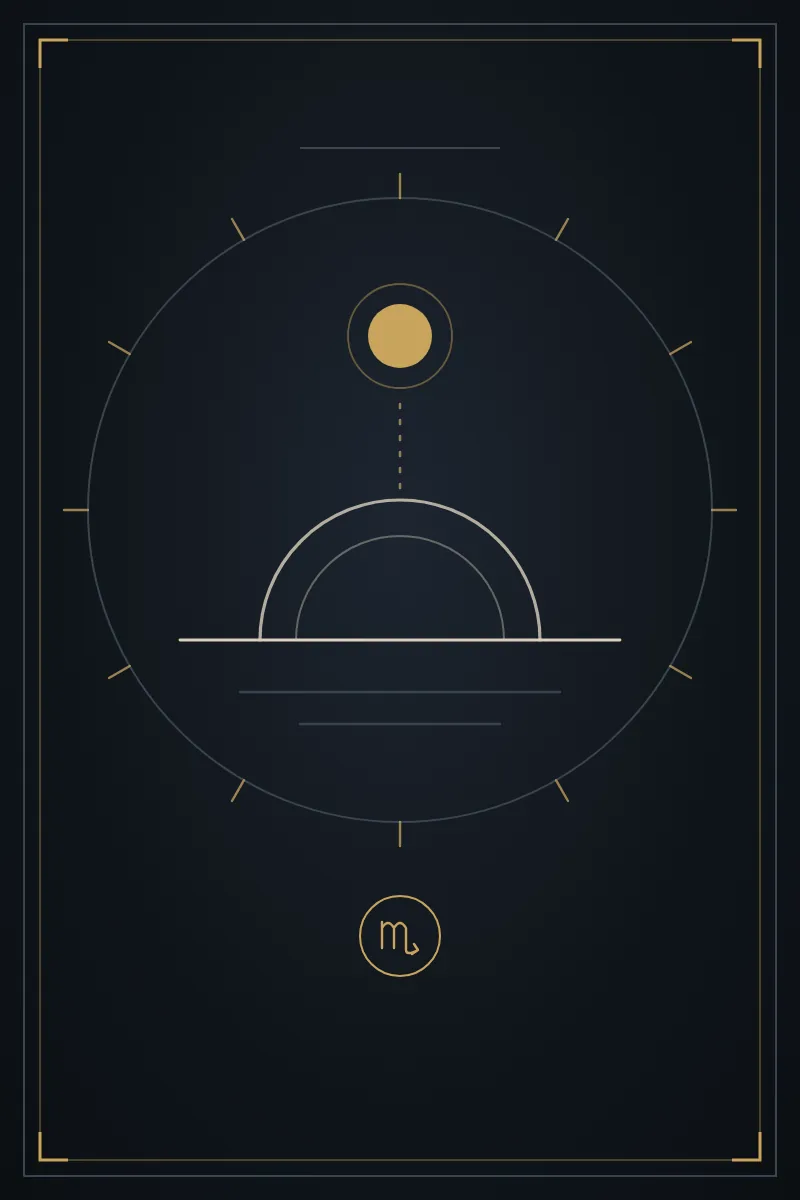
About this card
Death, the thirteenth card of the Major Arcana, rarely means anything literal. In tarot tradition it stands for an ending that opens space: a finished chapter, a spent habit, a relationship or role that has run its course. On the classic image a skeleton in armour rides a white horse, and people of every rank, from king to child, face it without exception. Beyond the horizon the sun rises. The card does not frighten so much as remind you that nothing keeps one form forever and that transformation belongs to life. Its presence in a spread invites an honest look at what has already ended even though it is still hard to admit.
Upright meaning — expanded
Upright, Death speaks of a close that is natural and nearly unavoidable. It might be the end of a job, a home, a long partnership, a life stage, or a belief about yourself that no longer fits who you have become. The card does not ask whether you want change. It shows that change is already underway and that the question is how you will meet it. Resistance usually lengthens the pain, while acceptance lets you pass through sooner and with more peace. After a door closes there is emptiness, but that emptiness is exactly what makes room for something new. It helps to say farewell consciously, perhaps through a letter, a conversation or a small ritual. Death seldom comes alone; it tends to precede rebirth. Notice the relief that often accompanies an ending, since it can be the first sign that the choice was right.
Reversed meaning — expanded
Reversed, Death describes resistance to a change that is already ripe. You cling to a familiar situation although it now gives you little beyond a feeling of safety. It might be a toxic arrangement, a job without growth, sentimental attachment to the past, or a habit you keep alive only because it is known. The card shows stagnation in which nothing ends and nothing begins. Fear of the void is understandable, but delay does not make parting any easier. In another reading the reversed card signals a slow, almost invisible transformation, one that happens in depth before it becomes visible. It is worth asking what exactly you are afraid to lose and whether it is really worth what holding on costs you now.
Love — deeper
In love, Death announces the end of a pattern. It does not necessarily mean a breakup. An old way of communicating may fade, along with a recurring quarrel or a role you both slipped into in order to cope. When the pattern leaves, a path opens towards a deeper and more honest bond. The ending of the old arrangement can hurt, yet it makes room for a relationship based on who you really are today. If a partnership truly is ending, the card encourages a farewell without accusations and a grief that is not weakness. For singles it signals closing a past story, after which it is easier to open to someone new. Reversed, it may point to dragging out a spent relationship for fear of loneliness, or going back to someone with whom everything has already been said.
Work — deeper
Professionally, Death closes a stage: a project, a role, a company, or a style of working that no longer matches your abilities. That may mean changing employer, a restructuring, moving to another field, or simply dropping tasks that have long been only duty. Refreshing your career path becomes possible once you release what is exhausted. The card favours tidying up: archiving, closing open threads, abandoning projects with no future. Do not treat it as failure. Reversed, it shows holding on to a post or method purely from fear of uncertainty. Ask what you would do if you were not afraid of change, and take one practical step, such as updating your CV or opening a talk about new responsibilities.
Advice — deeper
The advice of Death is simple though not easy: let it go. Make a list of things in your life that have already ended even though you still prop them up. Pick one and say goodbye to it in a way that means something to you. Do not rush to fill the emptiness, because a new direction is born inside it. Give yourself time for sadness, but watch that it does not turn into standing still. Look after your body and daily rhythm when the change is large. Talking with a close friend or a therapist often helps you cross the threshold more calmly.
Image symbolism
The skeleton in black armour embodies the one force before which all are equal. The white horse stands for purity and inevitability, while the black banner with a white rose speaks of beauty and renewal travelling alongside an ending. The bishop in his mitre prays before Death and is not spared, the king lies fallen, and the child looks on with curiosity, without fear. The river behind marks a border, and the two towers on the horizon form a gate through which the sun rises. Thirteen is often considered unlucky, but in tarot it is the number of transformation. The card is linked to the element of water, underlining the fluid, constant nature of change, and to the sign of Scorpio, associated with depth and rebirth.
Frequently asked questions
- Does the Death card predict someone's death?
- Practically never. In tarot it symbolises the end of a stage, a relationship or a way of living, and the transformation that follows. A literal reading is very rare and not recommended.
- What does Death mean in a relationship question?
- The end of a pattern or stage. It may lead to a deeper bond, but it can also mean the close of a partnership that has run its course. The card invites honesty with yourself.
- How should I read reversed Death?
- As resistance to change. You hold on to something that is spent, or a transformation is happening too quietly to notice. Ask what you fear.
- Why is there a rising sun on the card?
- It is a reminder that an ending is the beginning of something else. The sun rising between the towers stands for hope and renewal after passing through a close.